

„UpNoWaste” Project – Press Release | May 2026
The UpNoWaste project, funded by the Erasmus+ Programme, was launched in November 2024 and has now reached the halfway point of its implementation. During the first phase of the project, the partners analysed and identified the materials best suited for upcycling activities that can be carried out without complex industrial processes. The main objective was to promote sustainable, accessible and easy-to-implement practices that give new value to waste materials by transforming them into useful or decorative products.
Following the research and selection phase, several categories of materials suitable for creative upcycling were identified, including glass, plastic, textiles, paper, metal, wood and electronic components. Based on these findings, dedicated methodological guides were developed for each material type. These guides are designed to support teachers, trainers and participants in implementing upcycling activities through simple, sustainable methods that can easily be adapted to different educational settings.
From 7–9 October 2025, an important international training event for teachers and trainers took place in Udine, Italy, focusing on the practical application of upcycling techniques. The event provided an excellent opportunity for international knowledge exchange and strengthened cooperation among the project partners. Representatives from Università delle LiberEtà (Italy), Itinéraires: Direction Europe (France), Giresun Lisesi (Türkiye), Unofficial Media and Training (Ireland), Zavod GEA (Slovenia) and TREBAG Ltd. (Hungary) participated in the training.
Starting in October 2025, each partner organisation launched local pilot activities within their own communities, applying the methods developed during the project and adapting them to local needs. These activities involved participants of different ages and backgrounds, encouraging creativity, environmental awareness and the development of practical skills.
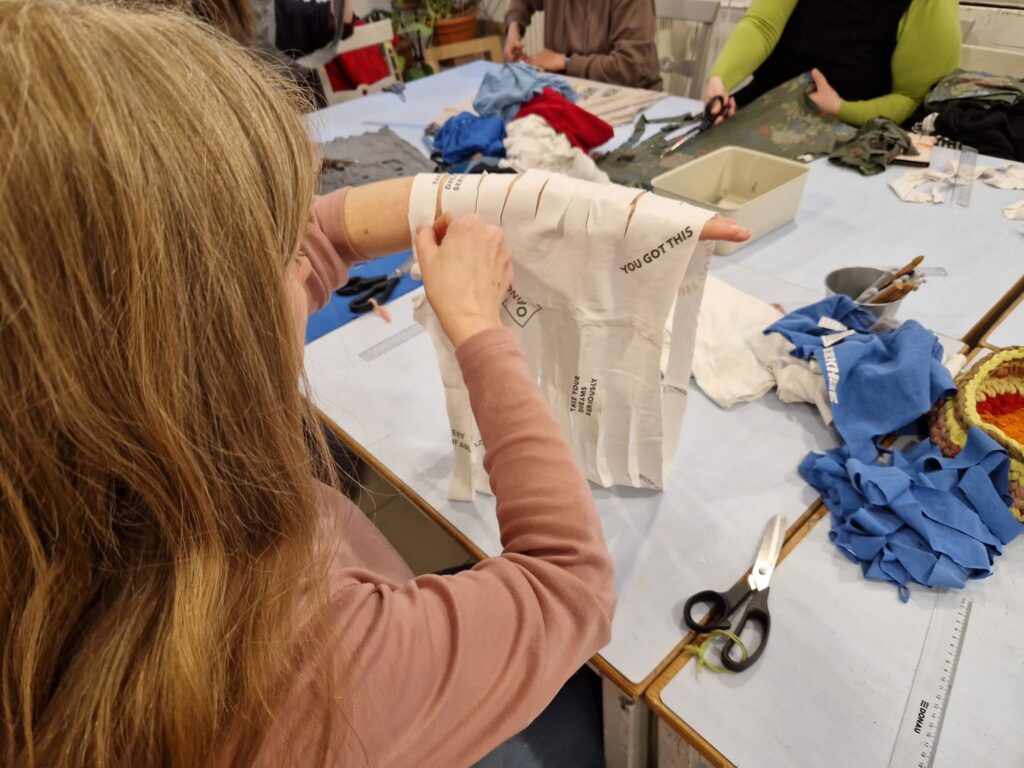
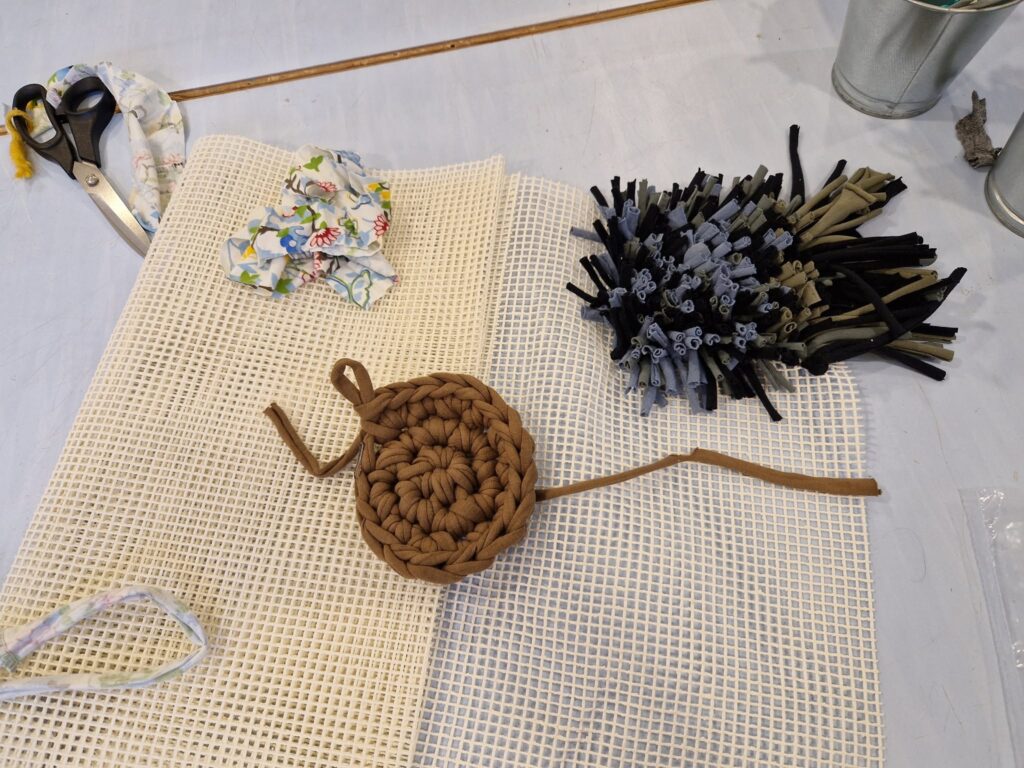
As part of the Hungarian pilot activities organised by TREBAG Ltd., participants took part in a series of Creative Upcycling Workshop sessions where they explored a variety of upcycling techniques. During the first two workshops, they created decorative bowls from recycled T-shirt yarn and learned how to transform old T-shirts into rugs using a traditional rug-hooking technique.
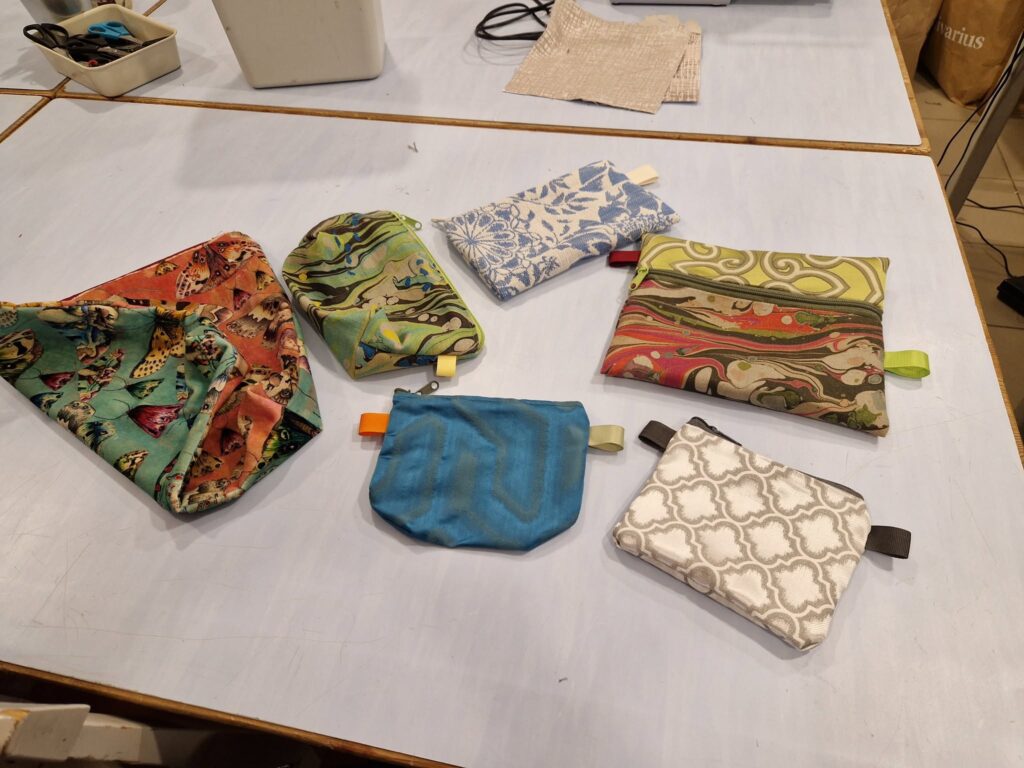
During the third workshop, participants reused fabric sample books from discarded upholstery collections to create unique textile purses, pencil cases and cosmetic bags. They selected the materials themselves and designed practical, one-of-a-kind handmade products.
The fourth workshop focused on reusing old bicycle inner tubes, which participants transformed into wallets and small pouches, giving a new purpose to materials that would otherwise have become waste.
A total of 10–15 participants attended the four-session workshop series, gaining not only creative experience but also valuable insights into sustainable living and environmental responsibility.
The feedback received from participants, together with the experiences gathered through the pilot activities implemented by all project partners, will contribute to the development of a practical Upcycling Handbook. This publication will compile the experiences, techniques, practical advice and best practices collected during the pilot activities carried out across the partner countries.
The handbook is intended to serve as a practical guide for establishing and operating Upcycling Cafés—community spaces where people can engage in creative recycling and transform waste materials into new products. These community initiatives promote environmental sustainability, encourage the sharing of knowledge and skills, and foster active civic participation through hands-on workshops and collaborative upcycling activities.
Follow the project for the latest news and updates!
Funded by the European Union. The views and opinions expressed are those of the author(s) only and do not necessarily reflect those of the European Union or the European Education and Culture Executive Agency (EACEA). Neither the European Union nor EACEA can be held responsible for them.